

 Back to Blogs
Vinyl Siding in South Jersey: What Salt Air and Wind Actually Do
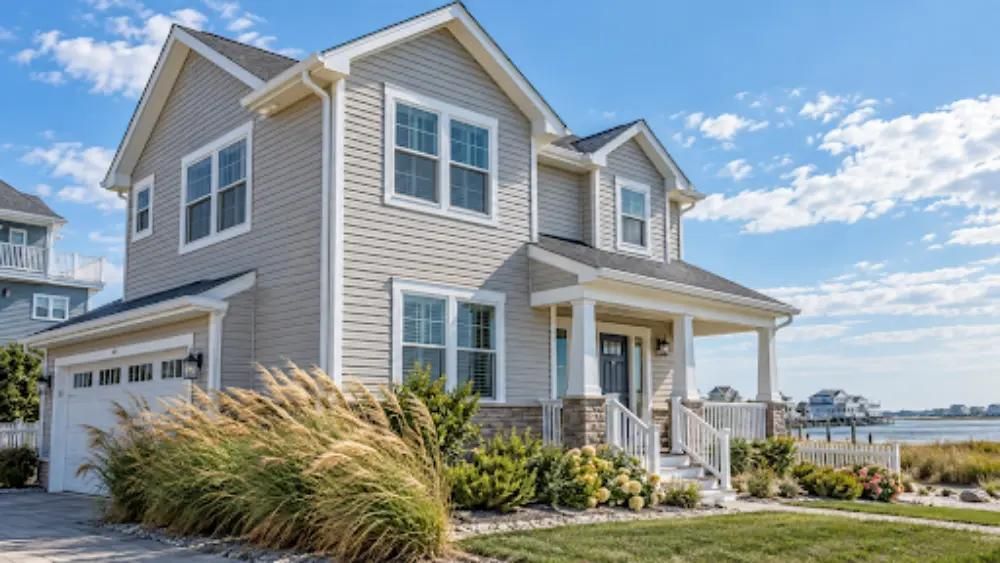
Salt air doesn't rust, rot, or corrode vinyl siding. That's the good news for anyone considering vinyl siding in South Jersey. The real coastal risks are wind lifting loose panels, salt and grime building up on the surface, and strong sun wearing on color over the years.
Most of those problems come down to two things you can control: how well the siding holds to your home and how well it's installed.
Below, we take each of those forces one at a time. You'll see what it does to a wall, what the warning signs look like, and which choices help siding handle life near the shore in Atlantic, Cape May, and Cumberland counties.
Salt Air: Less Damaging Than You Might Expect
Salt is hard on bare metal and unprotected wood. Vinyl is neither, so the air along the ocean or the Delaware Bay doesn't eat into the panels the way it eats into a railing or a car.
What salt does is leave a film. Sea mist carries fine salt that settles on your walls and mixes with dust and pollen. On a light-colored home, that buildup can make the siding look dull and hazy. On a shaded wall that stays damp, it can also give mildew a place to grow.
Cleaning it off is simple. A rinse with a garden hose, plus a soft brush and mild soap for stubborn spots, usually does the job. Homes closer to the water tend to need it more often than homes farther inland.
If you use a pressure washer, keep it on a low setting and spray straight at the wall or downward, never up under the panel edges, where water can get pushed behind the siding. It's an easy task to fold into your seasonal exterior maintenance.
Wind: The Force That Really Tests Siding
Wind is where coastal siding earns its keep. Strong gusts tend to pull at siding, trying to lift the bottom edge of a panel away from the wall. Once wind gets under one loose piece, it can start working on the pieces around it.
That's why the way panels lock together matters so much here. Each row of siding hooks onto the row below it. When that lock is tight, and the panels grip the wall well, wind has very little to catch.
When the lock is weak, or the panels were hung carelessly, trouble tends to show up in stages: a rattle or flapping sound during storms, a panel that looks bowed or wavy, and eventually a gap or a missing piece after a nor'easter.
Storms bring flying debris too, and a hard hit from a branch or loose object can crack a panel. After any big blow, walk around the house and look along each wall. Anything lifted, cracked, or out of line is easier to fix early than after the next storm.
Why Professional Installation Matters as Much as the Panel
Vinyl expands in summer heat and contracts in winter cold. A careful installer hangs each panel so it can shift slightly with the seasons while staying locked in place. Nailed too tight, siding can buckle when temperatures climb.
Hung too loose, it rattles in the wind. Getting that balance right on every wall is a skill, and it's the reason professional installation is part of every siding project we take on.
To see how a project unfolds from start to finish, read our guide to the siding installation process.
Sun and Temperature Swings: The Quieter Wear
A south-facing or west-facing wall with no shade takes the most sun. Over years, that exposure can soften the look of a color. Darker shades also absorb more heat than lighter ones, which means more expansion on hot afternoons.
That doesn't rule out a bold color. It simply means color deserves a little extra thought when your home sits in full sun. The easiest way to decide is to see the color on your own house first.
The Visualizer lets you upload a photo of your home and preview siding colors and styles on your actual exterior, which helps a lot when two shades look nearly identical on a small sample.
Shore Weather and Siding at a Glance
Here's how the main coastal forces compare.
| Coastal Force | What it Does to Vinyl Siding | What helps |
| Salt air and mist | Leaves a hazy film; can hold mildew on shaded walls | Periodic gentle rinsing |
| High wind and storms | Lifts panel edges, causes rattling, can loosen or crack panels | Strong panel locking, good wall grip, careful installation |
| Strong sun | Gradually softens color; adds heat to darker shades | Thoughtful color choice, previewed on your home first |
| Hot and cold swings | Expansion and contraction; buckling if nailed too tight | Installation that allows for seasonal movement |
Salt is mostly a cleaning issue. Wind and temperature are where the choice of panel and the quality of the install make the biggest difference.
Choosing Vinyl Siding for a South Jersey Home
For a home that takes a lot of wind, the biggest differences between our series come down to how they hold to the wall. Every series in our siding lineup uses an advanced locking system.
The 2000 Series adds superior holding power, a double-thick nailing hem, and exceptional wall-gripping. The 4000 Series steps up to a heavy-duty panel with a robust anchoring system, built to stay in place through extreme-force winds. All four series are made in the USA and carry the Good Housekeeping Seal.
Wind is only part of the decision. Color, texture, and budget matter too, and our series comparison explains what changes at each step up. If you're still weighing vinyl against other materials, our guide to siding options covers the bigger picture.
Siding carries its own warranty coverage, separate from the coverage on windows and patio doors, and you can review the details on our warranties page.
Get Siding Matched to Your Address
Every house in our area meets the weather a little differently. A home in Egg Harbor Township surrounded by mature trees sits in a very different spot than one a few blocks from the beach in Cape May County. The most reliable way to match a series to your walls is to have someone look at the house itself.
A free in-home or virtual consultation with one of our Design Consultants covers exactly that. We'll talk through your home's exposure, the series that fit it, and the colors you have in mind, then give you a free quote.
If you're budgeting ahead, our breakdown of vinyl siding cost explains what goes into the price. To spread out the cost, financing options are available through the Window World Credit Card Program, issued by Wells Fargo Bank, N.A., subject to credit approval.
We're locally owned and operated, and every project is backed by our promise: "Superior Products, Professionally Installed, at a Guaranteed Low Price." Call us at (609) 484-8088 or request your free quote online to find the siding that fits your home and your stretch of the shore.